


Most non-electric folding bikes weigh somewhere between 8 and 13 kg, and electric ones are heavier. A single number is not what decides whether a folder suits you, though. What matters is how far you carry it, how small it folds, and how pleasant it is over the miles you ride it. Read the weight alongside the folded size and the ride, and you will choose better than by chasing the lowest figure on a spec sheet.
That is also how we think about our own Pony folding bikes at Rog Bikes: a foldable aluminium frame for city storage, internal gears and a comfortable saddle for the riding.
TL;DR
- A sampled weigh-in of folding bikes found a range of 7.45 to 12.1 kg with an average of 9.80 kg, so 8 to 13 kg is a sensible expectation for a non-electric folder.
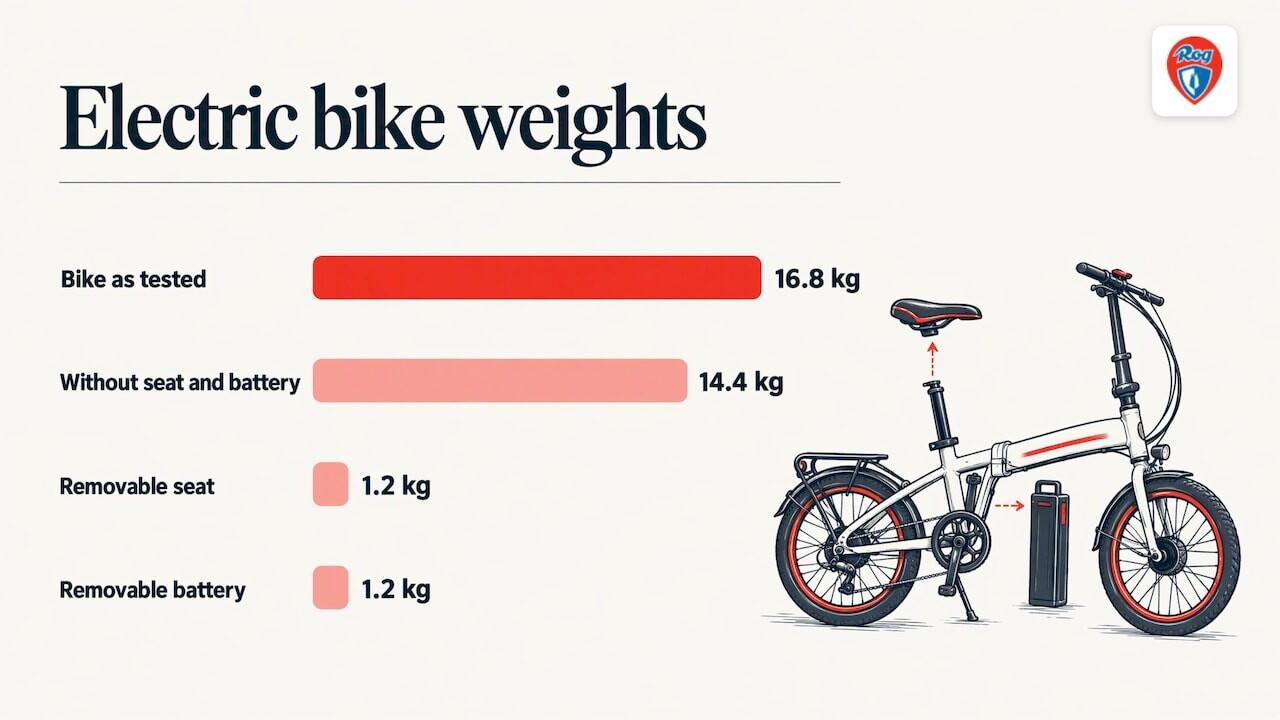
- Electric folding bikes are heavier: one UK-tested model weighed 16.8 kg, or 14.4 kg once the seat and battery were removed.
- Folded size matters as much as weight. Folded footprints in one 2025 roundup run from about 58 x 56 x 27 cm up to 86 x 84 x 39 cm.
- Rider weight limits are a separate figure from the bike’s own weight, so check both.
- Measure your stairs, cupboard or boot first, then pick the bike that you will genuinely enjoy riding.
Table of Contents
- How much does a folding bike weigh?
- Electric folding bikes are heavier
- What makes a folding bike heavier or lighter?
- Folded dimensions: the other number to check
- Will it fit? A five-minute check at home
- Carrying a folding bike: what to check
- Weight limits: the bike’s weight and the rider’s weight are different
- Why we look beyond the scale
- Choosing the right Pony for your own routine
- Find your Pony
- A quick worked example
- FAQ
- Sources
How much does a folding bike weigh?
A typical non-electric folding bike weighs around 9 to 12 kg. One bicycle weigh-in of folding bikes reported a range of 7.45 to 12.1 kg and an average of 9.80 kg. That is a sample rather than the whole market, but it gives you a useful picture. The lightest folders use expensive materials and stripped-back components, and sit at the bottom of the range. Most everyday models sit in the middle or towards the top of it.
It helps to put those numbers into everyday terms:
- Under 8 kg: a specialist, lightweight folder. Easy to lift with one hand, but usually a premium build.
- 8 to 10 kg: light enough to carry up a flight of stairs without much fuss.
- 10 to 13 kg: the common range for 20-inch-wheel folders. You will notice it on a long climb of steps, but it is entirely manageable for a short carry.
- 13 kg and above: often a larger-wheel folder, a bike with a motor, or one built with more accessories.
For comparison, a standard adult city bike that does not fold is typically heavier again, so even a 12 kg folder is not a burden if you mostly roll it rather than lift it.
Electric folding bikes are heavier
Adding a motor and battery adds kilograms. A 2025 road.cc review of an electric folder recorded 16.8 kg as tested. The same review says taking off the 1.2 kg seat and the 1.2 kg battery brings the bike to 14.4 kg. It is a handy reminder that the figure on the box and the figure you actually carry can differ, depending on what is removable.
If you are comparing electric and non-electric folders, ask what you will be lifting. A heavy bike you only ever wheel into a lift is a very different proposition from one you carry up three flights each evening.
What makes a folding bike heavier or lighter?
Four things do most of the work.
Frame material. Aluminium is the usual choice for a light folder, because it is light and does not rust. Steel frames tend to weigh more.
Wheel size. Smaller wheels, such as 16 inch, mean less metal and rubber. Larger wheels, such as 20 or 24 inch, usually make for a steadier, more comfortable ride on rougher streets, at the cost of a little more weight and a bigger folded package.
Gearing. A hub with internal gears is sealed away from rain and grit, while derailleur systems are exposed. Weight differences between systems are small compared with frame and wheel size, so choose gearing for how you ride: stop-start city traffic is much easier with internal gears, because you can change gear while standing still at the lights.
Extras. Mudguards, racks, lights, a leather saddle and a lock all add grams. They also make the bike more useful on a daily commute, so a few hundred grams of extras is often a fair trade.
Folded dimensions: the other number to check
Weight tells you how heavy the bike is. Folded size tells you whether it fits where you want to put it. Cyclingnews’ best folding bikes feature lists folded sizes across several models, and the spread is wide:
| Wheel size | Folded size (cm) | Weight |
|---|---|---|
| 16 inch | 58.5 x 56.5 x 27.0 | 7.95 kg |
| 20 inch | 39.5 x 80 x 73 | 12.8 kg |
| 20 inch | 78 x 66 x 44 | 12.9 kg |
| 20 inch | 33 x 78.7 x 51 | 12.7 kg |
| 24 inch | 39 x 86 x 84 | 13.3 kg |
Two things stand out. First, bikes of almost identical weight can fold into quite different shapes: three of the 20-inch bikes weigh between 12.7 and 12.9 kg, yet one is only 33 cm thick and another is 73 cm deep. Second, the smallest bike is not always the one you want. A larger folded package is the price of a larger, more comfortable wheel.
When you read a dimensions line, remember it is usually length x height x width in whatever order the maker chooses. Check which number is which before you measure your space.
Will it fit? A five-minute check at home
Before comparing bikes, measure the places the bike will live and travel.
- Home storage. Measure the height, width and depth of the cupboard, under-stairs space or hallway corner. Leave a few centimetres for pedals and handlebars, which are often the parts that stick out.
- Car boot. Measure the boot opening, not just the interior. Many hatchbacks have a narrower opening than the space behind it.
- Office or desk. Folded, a bike can sit beside a desk or in a lockable cupboard. Look at the floor space and check it is not a fire escape route.
- Train and bus. Rules on folded bikes differ between operators, so look at the operator’s own page before you travel, especially at peak times.
Then add up the unglamorous bit: how many stairs, and how many times a day? Ten steps once a day suits almost any folder. Four floors twice a day makes weight the deciding factor.
Carrying a folding bike: what to check
Some habits make a 12 kg bike feel lighter.
- Find the balance point. Most folders carry best by the frame near the middle, where the weight sits under your hand. A bike that hangs awkwardly from the handlebar is tiring at any weight.
- Switch hands. Carry it on one side for a flight, and swap for the next.
- Roll when you can. Many folders have small wheels or rollers that let you push the folded bike along a platform or corridor. Carrying only for stairs and gaps cuts the effort.
- Check the latches. Before lifting, make sure the frame catch is closed so nothing swings open as you walk.
- Try the fold. A fold that takes ten seconds is one you will actually use; a fiddly fold is a bike you leave at home.
Weight limits: the bike’s weight and the rider’s weight are different
It is easy to confuse two figures. The bike’s own weight is what you lift. The maximum rider weight, sometimes called the payload or load limit, is how much the bike is built to carry, including you and any luggage. Makers state this figure, and it varies between models, so read it on the product page or in the manual and keep within it.
A few practical points:
- Count the luggage. Your own weight plus a full backpack or pannier is the number to compare with the limit.
- A folding frame has a hinge or latch that a fixed frame does not. Keep any bike’s stated limit in mind, and use the saddle and handlebar posts only up to their marked minimum-insertion lines.
- If you are close to a stated limit, or have questions about a particular model, ask the maker before you buy.
Why we look beyond the scale
We build the Pony range around everyday city life: the stairs, the lift, the hallway and the commute. The bikes have a foldable aluminium frame so they fit compact storage, and stainless steel chains and spokes for durability. Internal gear hubs keep the drivetrain tidy and let you change gear smoothly in traffic. Comfort comes from a Selle San Remo saddle, with Brooks leather seats also available, and integrated LED lighting comes as part of the design.
Our view on folding bike weight
Spec sheets reward the lowest number, but a bike is ridden far more than it is carried. Most people spend a few seconds lifting and many minutes pedalling, so the saddle, the gears and the way a bike looks on the street matter every day.
That is why we design the Pony bikes as a whole: a modern-retro look people stop to comment on, a foldable aluminium frame that packs away at home or at work, stainless steel parts that are made for city weather, and internal gears for smooth, simple riding.
When you compare folders, we would suggest asking three questions in this order. Will it fit the space I have? Will I enjoy riding it every day? Can I manage the carry I actually face? A bike that answers yes to all three is the right weight for you.
the author
Choosing the right Pony for your own routine
Different riders have different routines, and our range reflects that.
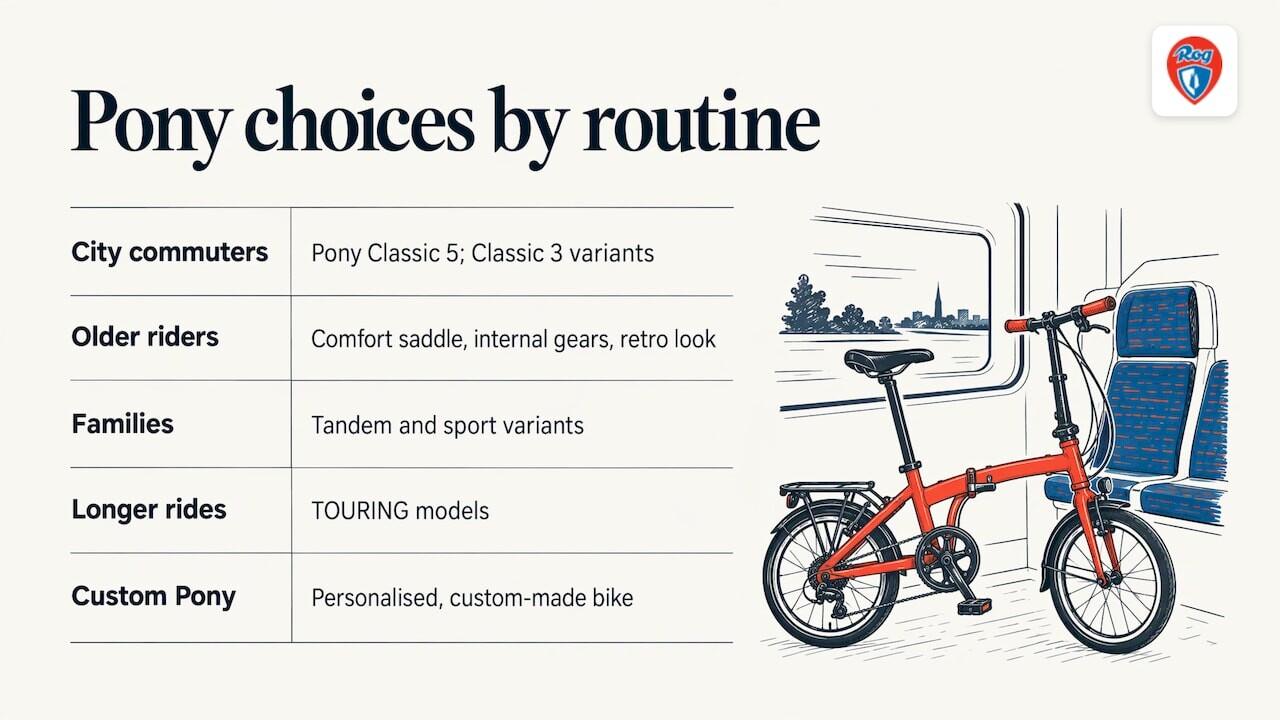
City dwellers and young commuters. If you ride to work and fold the bike for the office or the train, the Pony Classic 5, our new-generation Pony, is where to start. The Pony Classic 3 and Pony Classic 3 Exclusive are also worth a look.
Older riders who want style and comfort. A comfortable saddle and internal gears mean fewer things to think about, and an upright, retro look suits riders who want a bike that is as stylish as it is practical.
Families and parents. If you ride with a partner or want a shared bike, there are tandem and sport variants in the range. See PONY DUO and the Pony Double.
Longer rides. For weekend trips and suburban adventures, look at the TOURING models.
A bike that is yours alone. If you want a personalised, custom-made Pony, start from the range and tell us what you have in mind.
Find your Pony
If you have measured your space and know how you will ride, the next step is to look at the range in the Rog Bikes shop. Every Pony is a foldable aluminium-framed bike with stainless steel components, internal gears and a comfortable saddle, designed to be ridden as much as it is stored.
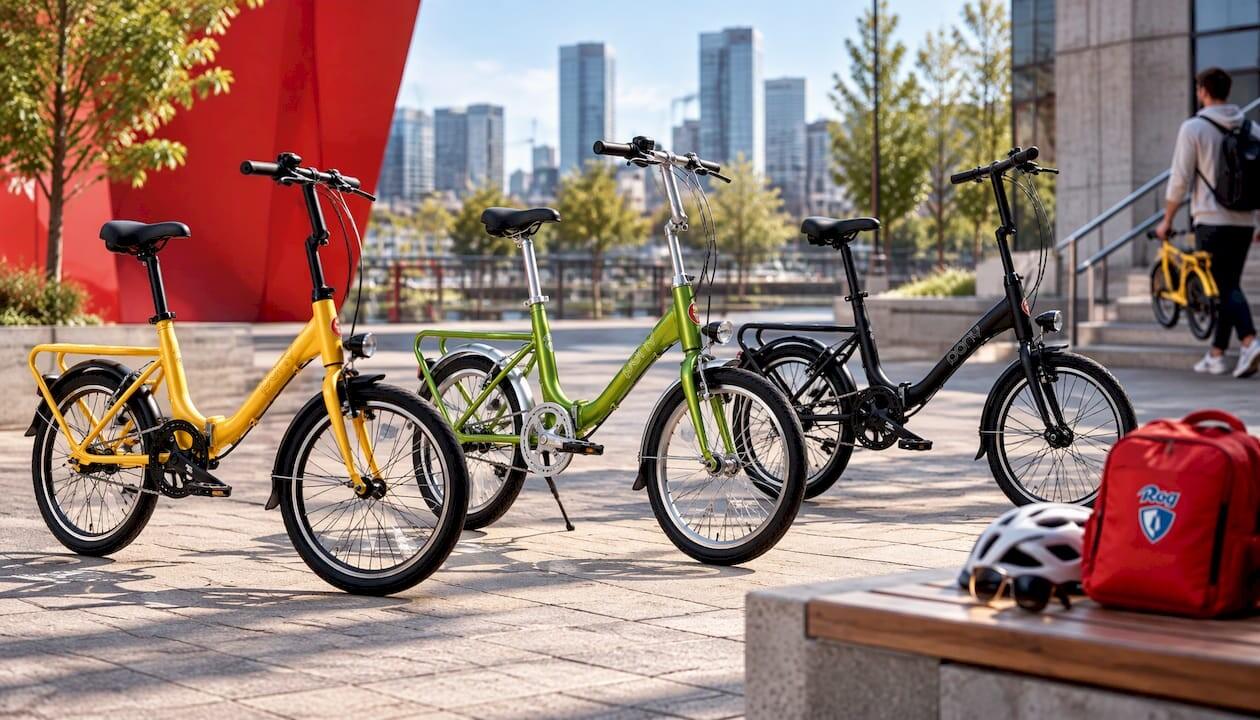
We also stock locks, helmets, pumps, bags and lubricants, so you can kit out your bike with the essentials at the same time.
A quick worked example
Suppose you live on the second floor of a building without a lift, commute by train, and keep the bike in a hallway cupboard that is 80 cm high and 50 cm deep.
- Stairs: two flights, twice a day. A bike in the 10 to 13 kg range is manageable if you carry it by the frame and switch hands.
- Cupboard: you need a folded height under 80 cm and depth under 50 cm. Only some of the folded sizes in the table above would fit. This one measurement cuts your shortlist faster than any weight figure.
- Train: you will fold and unfold at both ends, so choose a quick, simple fold.
- Ride: with a commute of several miles, comfort and gearing matter. Internal gears let you change down at a stop, and a good saddle keeps the ride pleasant.
In that example, folded dimensions come first, the carry second, and the ride third. Weight, taken alone, would have sent you in the wrong direction.
FAQ
How much does the average folding bike weigh?
A non-electric folding bike usually weighs around 9 to 12 kg. A weigh-in of sampled folding bikes found an average of 9.80 kg within a range of 7.45 to 12.1 kg. Electric folders add the motor and battery, so they are heavier.
What size is a folding bike when folded?
It depends on the wheel size and the fold. In one 2025 roundup, a 16-inch folder measured 58.5 x 56.5 x 27.0 cm and a 24-inch folder measured 39 x 86 x 84 cm. Always check the maker’s folded dimensions against your own space before buying.
Is a lighter folding bike always better?
Not necessarily. A lighter bike is easier to carry, but you ride the bike far more than you lift it. Saddle comfort, gearing, wheel size and how neatly it folds all shape your day-to-day experience.
Is a folding bike’s weight the same as its weight limit?
No. The bike’s weight is what you lift. The weight limit is the maximum load the bike is designed to carry, including you and your luggage. Find it on the product page or in the manual and stay within it.
Sources
- How Much Do Bikes Weigh? Bicycle weigh-in
- Velo de Ville E-Foldy review, road.cc
- Best folding bikes, Cyclingnews


