


An aluminium bicycle frame is built from tubes of alloyed aluminium, welded together and heat-treated. It is light, stiff, affordable and corrosion-resistant. That combination is why it is the usual choice for bikes that get carried, folded, locked outside and ridden every day. If you want a city bike that is easy to lift and quick to fold, an aluminium frame is the sensible place to start. Our Pony folding bikes use a foldable aluminium frame for exactly that reason. This guide explains how these frames are made, how they compare with steel, carbon and titanium, and what to look at beyond the frame itself.
TL;DR
- Aluminium frames are lightweight, stiff and robust, and cost around a fifth of a comparable carbon frame, according to BikeRadar’s frame materials guide.
- Builders shape the tubes (butting, hydroforming) to tune strength and ride feel, so two aluminium frames can feel very different.
- For comfort, tyres, saddle, geometry and tube design count as much as the metal itself.
- Aluminium suits commuting, shared storage and folding, where weight and weather resistance matter every day.
- Our Pony bikes combine a foldable aluminium frame with internal gears, a Selle San Remo or Brooks leather seat and stainless steel chain and spokes.
Table of Contents
- How an aluminium bicycle frame is made
- Why aluminium suits city and folding bikes
- Aluminium, steel, carbon and titanium compared
- Does the frame material decide how comfortable the bike is?
- Which riders benefit most
- Choosing an aluminium bike: what to look at
- Pony bikes: aluminium made for the city
- Perspective
- FAQ
- Sources
How an aluminium bicycle frame is made
Pure aluminium is too soft for a frame, so frame tubes use alloys, commonly 6061, 7005 or 7046. The numbers are grades that describe which other metals are mixed in. According to Shapes by Hydro’s technical article on frame alloys, the process runs roughly like this:
- The alloy is extruded, which means pushed through a shaped opening to form a tube.
- The tube is annealed, a heat treatment that makes it more workable.
- The tube is shaped. Butting makes the walls thicker at the ends and thinner in the middle. Hydroforming uses fluid pressure to push the tube into a new profile.
- The tubes are welded into a frame.
- The finished frame is heat-treated again, then surface-treated and painted.
That last heat treatment matters. Welding changes the metal around the joint, and the second round of heat treatment restores the strength in those zones. A frame engineer quoted by Bicycling says the welds are where the craft lies, and that builders use butting, hydroforming and gussets (small reinforcing plates) to look after them.
The practical point for a buyer: an aluminium frame is an engineered object. Tube shape, wall thickness and weld quality decide how it rides, not just the word “aluminium” on the box.
Why aluminium suits city and folding bikes
Light enough to carry
Aluminium is less dense than steel. BikeRadar explains that makers use oversized tubes with thicker walls and still end up with a lighter frame. If your commute includes a flight of steps, a train platform or a flat on the third floor, every kilo is felt. For folding bikes the effect is bigger, because you lift the whole bike far more often than you would a conventional one. We cover the numbers in our guide to folding bike weight.
Stiff and responsive
A stiff frame sends your pedalling effort into the wheels instead of absorbing it. BikeRadar lists a strong stiffness-to-weight ratio among aluminium’s main advantages. Pulling away from traffic lights or climbing a short hill, you feel the bike respond.
Resistant to weather
Aluminium does not rust. Steel frames need paint or coating to keep rust off, as BikeRadar notes, while BIKEPACKING describes aluminium as lightweight, budget-friendly and corrosion-resistant. For a bike that lives in a hallway, a shared bike store or on a rainy British street, that is a real saving in upkeep.
Fair on price
BikeRadar puts a typical aluminium frame at around a fifth of the price of carbon fibre, and says it can be lighter than a carbon frame at a similar price. Money you do not spend on the frame can go on parts you touch every ride: the saddle, the gears and the lights.
Robust in daily use
BikeRadar describes aluminium as robust and less susceptible to crash damage than carbon. A city bike gets leaned against walls, squeezed into racks and bumped in lifts, so that toughness is useful.
Aluminium, steel, carbon and titanium compared
There are four frame materials you will meet when shopping. Here is how they sit against each other on the points a city rider cares about, drawing on BikeRadar’s comparison and a peer-reviewed study of frame materials.
| Material | Weight | Cost | What it is known for |
|---|---|---|---|
| Aluminium | Light, even with oversized tubes | Affordable, about a fifth of carbon | Stiff, robust, corrosion-resistant, easy to shape |
| Steel | Heavier | More expensive to mass-manufacture | Springy ride, easy to repair, needs paint or coating against rust |
| Carbon fibre | Lightest | Highest of the common materials | Very tunable, favoured for racing |
| Titanium | Light | High, the main barrier to wide use | Optimum strength in the study’s tested conditions |
Aluminium versus steel
This is the comparison most readers search for. Steel is the traditional material and has a loyal following for its springy feel. Aluminium wins on weight and on cost for mass-produced bikes, and it needs no protective coating to keep rust at bay. For a city bike you carry, fold and park outdoors, those are the qualities that count.
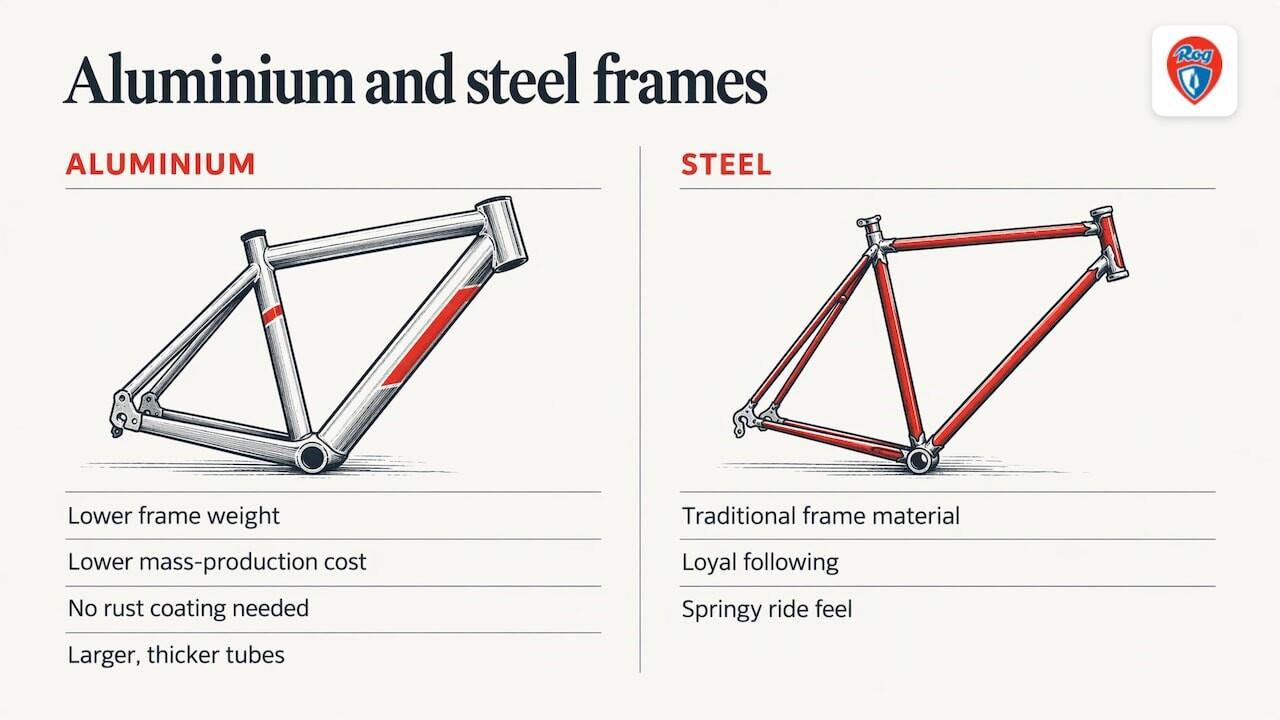
The tube shape matters a good deal. Sheldon Brown, a well-known cycling technician, pointed out that aluminium frames use larger tube diameters and thicker walls to reach the stiffness they need, which is why you see chunkier tubes on aluminium bikes.
Carbon and titanium
Carbon is the choice of racers who chase every gram, and titanium is admired for strength but costs a great deal. Neither is needed for getting to work, to the shops or to the park. An aluminium frame gives you most of what a city rider benefits from at a price that leaves room for good components.
Does the frame material decide how comfortable the bike is?
Less than you might think. BIKEPACKING’s survey analysis notes that tube shape, thickness and length often have an even greater effect on ride feel than the material. Butting, for instance, was a big step forward for aluminium, not because it made frames lighter or stronger, but because it added flex in lightly stressed areas and so improved ride quality, as Bicycling reports. Hydroforming then made aluminium second only to carbon in how far it can be shaped.
Other parts of the bike do much of the comfort work:
- Tyres. Sheldon Brown argues that wider, softer tyres make more difference to comfort than the frame.
- Saddle. A good saddle takes pressure off where you actually sit. Our Pony bikes come with a comfortable Selle San Remo seat or a Brooks leather seat.
- Fit. A bike that suits your body is more comfortable than any material choice. Our bike fit basics page shows how it should feel.
- Gears. Internal gear hubs shift smoothly, even when you stop, which makes stop-start city riding calmer.
Which riders benefit most
City dwellers with little space. A light frame that folds means the bike can live in a flat, an office or a train carriage instead of a damp shed.
Young commuters. Aluminium’s low weight and weather resistance suit daily riding in all conditions. Stainless steel chain and spokes add to that durability on our Pony bikes.
Older riders who want style as well as ease. A lighter frame is easier to lift and manoeuvre. A retro look, a comfortable saddle and internal gears with no derailleur to fiddle with make for a relaxed ride. The Rog Touring Women model is one to look at.
Parents. A bike that is straightforward to fold and store works for family life, and our range includes a tandem-style model, Pony Double.
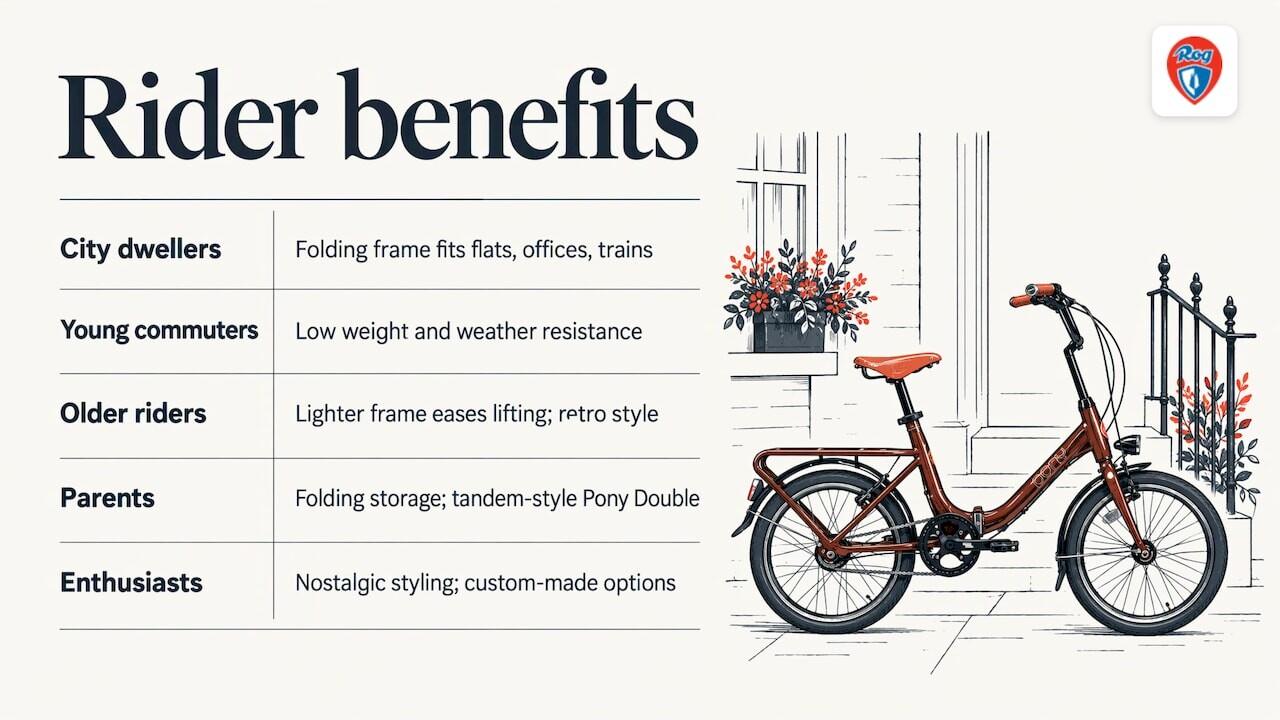
Enthusiasts after character. A Pony combines modern engineering with nostalgic styling. If you want something personal, we also make custom-made Pony bikes.
Choosing an aluminium bike: what to look at
- The whole bike, not only the frame. Check the gears, saddle, lighting, chain and spokes. A good frame with poor parts is a poor bike.
- Fold and lift. Think about where you will store and carry it. Our folding bike weight guide explains what is normal.
- Fit. Frame sizes are quoted in centimetres, measured along the seat tube. The right size depends on your height and leg length, so use a fit guide.
- Your riding. Short hops suit a simple, upright bike. Longer or sportier rides may suit a model like the Pony Sport Racer.
Pony bikes: aluminium made for the city
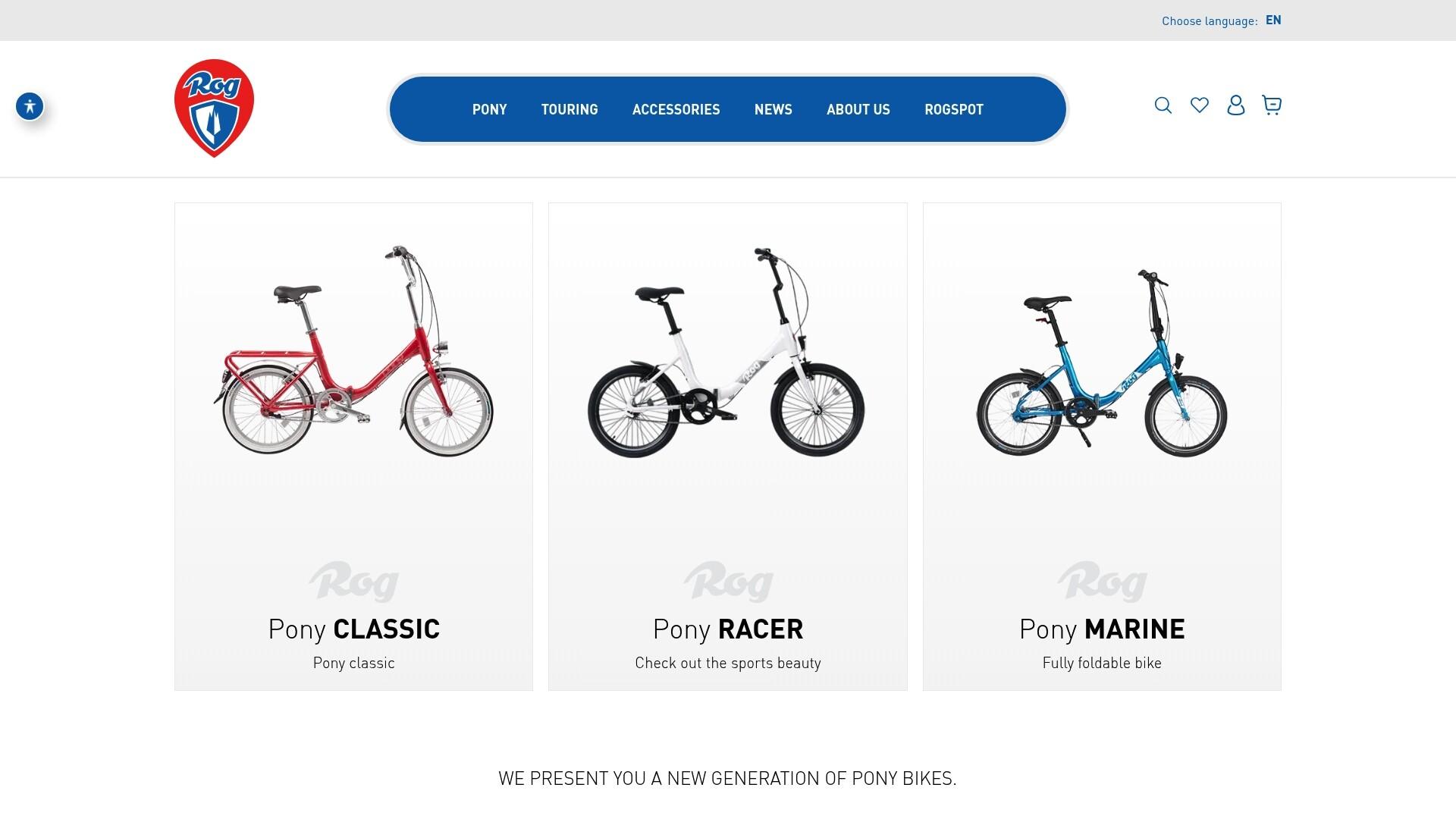
Every Pony has a foldable aluminium frame, stainless steel chain and spokes, internal gear hubs and integrated LED lighting. The seat is a Selle San Remo or a Brooks leather one. Choose from the Pony Classic, Pony Classic 3, Pony Classic 3 Exclusive or the Pony Marine, or see the full range on our shop.
We also stock helmets, locks, pumps, bags and clothing to go with the bike, so you can order everything for your first ride in one place.
Perspective
We build Pony bikes around a simple idea: a bike for the city should be easy to live with. That starts with the frame. Aluminium gives us a folding frame that is light enough to carry and does not need nursing against the weather.
Then we spend the rest of the effort on what you feel every day. Internal gears so you can change down at the lights. A Selle San Remo or Brooks leather saddle. Stainless steel chain and spokes that keep their finish. LED lighting built in so you are never hunting for a clip-on.
Retro looks are the part people notice first, but the engineering underneath is modern. We want a Pony to start conversations on the street and then quietly do its job for years.
the author
FAQ
Are aluminium bikes better?
They are better for many everyday uses. Aluminium is light, stiff, robust and affordable, and it resists corrosion, which suits commuting and city riding. The best choice for you depends on where you ride, what you carry and how much you lift the bike.
Is an aluminium frame strong enough for daily riding?
Yes. Builders use alloys such as 6061 and shape the tubes with butting and hydroforming to give the strength needed. BikeRadar describes aluminium as robust and less prone to crash damage than carbon. Larger tube diameters are used to keep the frame stiff, as the Exploratorium explains.
Is aluminium or steel better for a bike frame?
For a city or folding bike, aluminium is usually the practical choice: it is lighter, cheaper to mass-produce and does not rust. Steel is known for a springy ride. If you carry, fold and park your bike often, aluminium’s low weight and weather resistance matter most.
Is aluminium spelled “aluminum” or “aluminium”?
British English uses “aluminium”, and American English uses “aluminum”. The metal and the frames are the same, so both spellings describe the same bike.
Does an aluminium frame make the ride harsh?
Not by itself. Tube shape, tyres, saddle and fit shape ride feel at least as much as the material. Our Pony bikes pair the aluminium frame with a comfortable saddle and internal gears for a smooth, relaxed ride.
Sources
- Bike frame materials compared (BikeRadar)
- What aluminium alloys are best for bicycle frames? (Shapes by Hydro)
- Aluminum Might Be the Best Frame Material (Bicycling)
- Framing the Question: Our Aluminum Bike Survey (BIKEPACKING)
- Choosing the optimum material for making a bicycle frame
- Frame Materials for the Touring Cyclist (Sheldon Brown)
- Science of Cycling: Frame Materials (Exploratorium)


